
Choosing the right water storage tank involves more than selecting a suitable capacity. The material affects corrosion resistance, hygiene, durability, maintenance, installation and long-term performance. When comparing a Stainless Steel Water Tank with plastic, concrete, conventional steel or fiberglass alternatives, the better choice depends on where the tank will be installed, what type of water it will store and what performance the application requires.
Stainless steel is widely used in drinking-water applications because appropriately selected grades offer corrosion resistance and compatibility with potable-water systems. Grades such as 304 and 316 are commonly used for water-related applications, although the correct grade depends on water composition and environmental exposure. Chlorides, temperature, surface condition, tank geometry and fabrication quality can all influence corrosion behaviour, so material selection should be based on actual service conditions rather than the label "stainless steel".
How Stainless Steel Compares With Other Tank Materials
The principal advantage of stainless steel is the combination of structural strength and inherent corrosion resistance. Chromium in the alloy allows a passive oxide layer to develop on the surface, helping protect the underlying metal. This passive layer contributes significantly to stainless steel's corrosion resistance, although it does not make the material immune to corrosion under every condition.
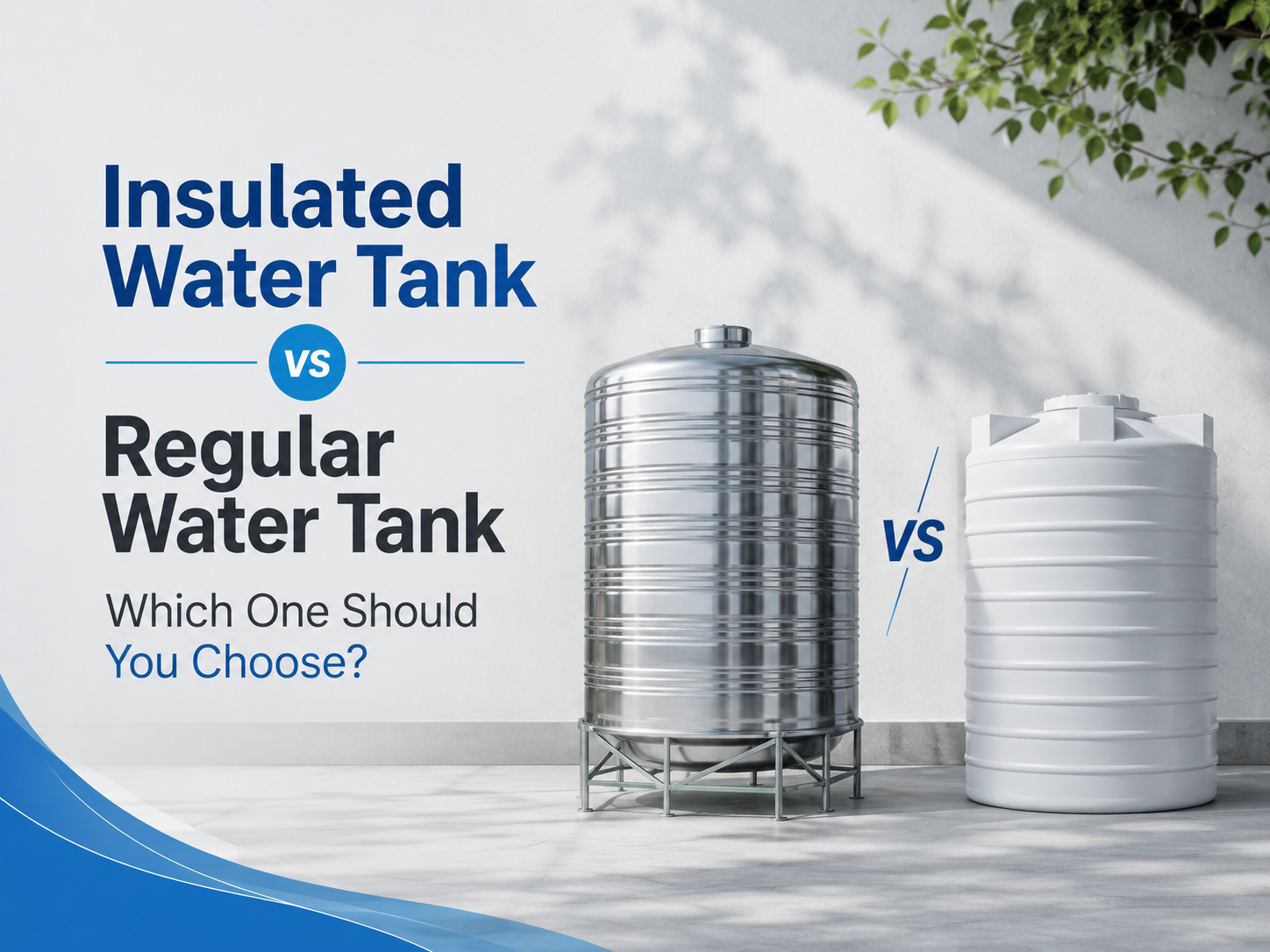
Plastic tanks have a different performance profile. Their relatively low weight can simplify handling and installation, and appropriately manufactured plastic tanks can serve many residential water-storage requirements. Their outdoor performance, however, depends on factors such as polymer type, UV stabilization, temperature and installation conditions. Consequently, plastic should not be judged as a single uniform material category.
Concrete tanks offer substantial structural mass and are commonly incorporated into permanent building infrastructure. Their construction, waterproofing, surface condition and maintenance requirements differ from those of prefabricated stainless-steel tanks. Conventional carbon-steel tanks also require suitable corrosion-protection measures because carbon steel does not naturally provide the same passive corrosion resistance associated with stainless steel.
Fiberglass-reinforced plastic tanks represent another material category with their own characteristics relating to weight, corrosion resistance, fabrication and installation. The appropriate choice therefore depends on the project rather than on a universal hierarchy of tank materials.
The more meaningful comparison is whether the selected tank provides the required balance of corrosion resistance, water-contact hygiene, structural integrity, thermal performance, installation practicality and expected service conditions.
Also read: Common Mistakes to Avoid When Buying a Stainless Steel Water Tank
Why Hygiene Matters in Water Storage
Water quality can be influenced by what happens after water enters the storage system. The internal tank surface, fittings, cleanliness and maintenance practices all form part of the storage environment. Stainless steel is widely used in hygienic applications because appropriately finished surfaces can support effective cleaning and limit the retention of particles and microorganisms.
This characteristic can be valuable in homes as well as applications where hygiene requirements are more demanding, including healthcare, pharmaceutical and food-related facilities. However, stainless steel should not be presented as a substitute for proper tank maintenance. Government of India water-supply guidance recommends regular inspection and cleaning of storage reservoirs, with cleaning requirements influenced by sediment accumulation, biofilm formation and water-quality conditions.
Tank construction also matters. Neropure's residential Comfort Series uses food-grade SS304, double-wall PUF insulation, automated TIG-welded joints and factory leak testing. These specifications demonstrate why buyers should evaluate the complete tank design, fabrication and quality-control process rather than selecting a storage system solely by material name.
Stainless Steel vs Plastic for Rooftop Storage
Rooftop tanks are exposed to conditions that may include direct sunlight, elevated temperatures, rain and repeated temperature changes. Material selection should therefore consider the actual outdoor environment and the construction of the tank.
Stainless steel obtains its corrosion resistance from its chromium-containing passive surface, while plastic tanks depend on the characteristics of their polymer and any UV-stabilization measures incorporated into their construction. Outdoor performance in either case depends on the specific product, installation conditions and environmental exposure.
Another important consideration is thermal performance. The base material of a tank and its insulation system should be evaluated separately. A stainless-steel tank can be engineered with additional insulation to reduce heat transfer, making this particularly relevant for rooftop installations where solar exposure can affect stored-water temperature.
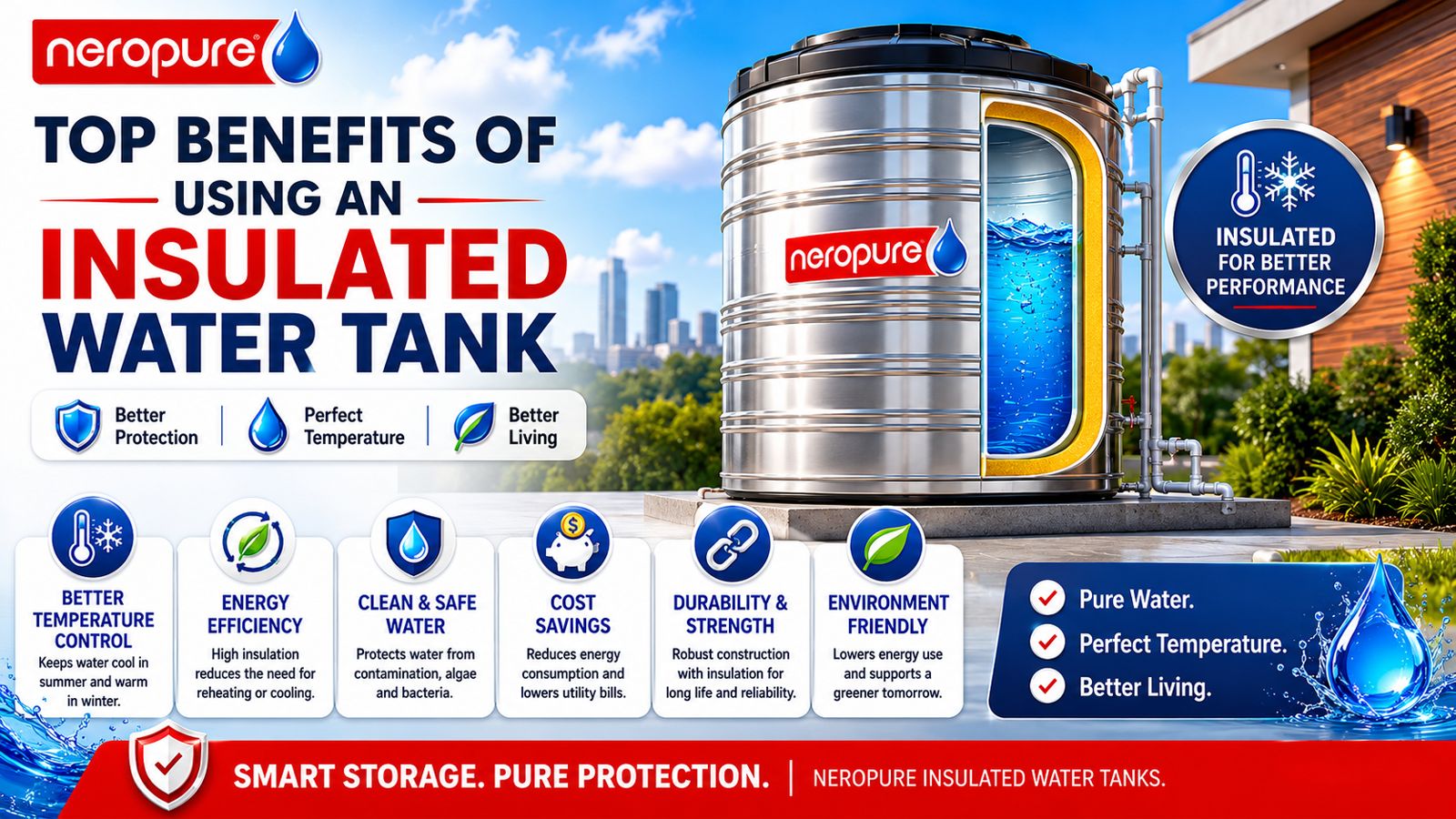
Neropure's insulated tank construction uses multiple insulation layers, while its residential Comfort Series incorporates double-wall PUF insulation. This approach makes thermal insulation a relevant factor when comparing storage solutions intended for exposed rooftop environments.
Ultimately, the better water tank is not determined by material alone. The right selection should match the water chemistry, required capacity, installation environment, hygiene expectations, structural requirements and desired service performance of the application.
Stainless Steel vs Conventional Steel Tanks
Conventional steel and stainless steel may appear similar because both provide a rigid metallic structure, but their corrosion behaviour is different. A conventional steel tank generally requires protective coatings or other corrosion-control measures to protect exposed surfaces from moisture. Stainless steel contains chromium, which enables the formation of a passive protective layer and provides inherent corrosion resistance.
This distinction becomes particularly relevant when the tank is exposed to humid conditions or challenging environments. However, stainless steel is not automatically immune to corrosion. Chloride-rich water, salt-laden air, unsuitable grades, poor fabrication and crevice conditions can contribute to localized corrosion. The appropriate stainless-steel grade should therefore be selected according to the actual service environment.
For buyers comparing a Steel Tank with stainless steel, the decision should focus on the required maintenance approach, corrosion resistance, expected service conditions and construction quality rather than simply comparing the two materials by name.
Stainless Steel vs Concrete Water Tanks
Concrete water-storage systems can provide substantial structural strength and are commonly incorporated into buildings and permanent infrastructure. However, their construction is fundamentally different from a fabricated stainless-steel tank. Concrete systems require appropriate structural design, waterproofing and attention to the condition of the water-contact surface.
A stainless-steel tank can offer a prefabricated approach where the vessel is manufactured, tested and transported for installation. This can make it suitable for projects where installation flexibility, customization or a controlled manufacturing process is important.
The internal surface is another consideration. Stainless steel provides a durable metallic water-contact surface that can be fabricated for hygienic applications. Concrete, by comparison, may require appropriate treatment or lining depending on the design and intended water-storage application.
The better option ultimately depends on the building design, available space, structural requirements, installation method and long-term maintenance expectations. Neither material should be considered universally suitable for every project.
Stainless Steel vs Fiberglass Water Tanks
Fiberglass-reinforced plastic, commonly referred to as FRP, combines a polymer matrix with reinforcing fibres to achieve a lightweight yet relatively strong structure. It can provide useful corrosion resistance and may be suitable for particular water-storage applications.
Stainless steel offers a different combination of properties, including metallic structural strength, corrosion resistance and a surface that can be fabricated and finished for hygienic service. The choice between stainless steel and FRP should consider water chemistry, temperature, UV exposure, structural requirements, installation conditions and the expected operating environment.
For applications where hygiene, long-term structural reliability and premium fabrication are priorities, stainless steel may be particularly attractive. For other applications where low weight or specific installation requirements are more important, FRP may warrant consideration.
Also read: Common Mistakes to Avoid When Choosing an SS Water Tank
Does Stainless Steel Offer Better Long-Term Value?
Long-term value should not be judged solely by the initial purchase cost. A more meaningful assessment considers service life, maintenance requirements, corrosion protection, cleaning, replacement frequency and the conditions under which the tank will operate.
Stainless steel can provide long-term corrosion resistance without relying on conventional external corrosion-protection coatings. Its durability can therefore be an important consideration for buyers looking for a storage solution intended for extended service.
However, lifecycle performance still depends on correct material selection and maintenance. Water chemistry, chloride exposure, temperature, installation quality and cleaning practices can influence the actual service performance of any tank.
For this reason, a Stainless Steel Water Tank can be a strong long-term choice when durability, hygienic storage and reduced corrosion-related concerns are priorities, but the specification should always be matched to the application's actual requirements.
Does Tank Insulation Matter More Than Material?
Material and insulation solve different problems. Stainless steel primarily contributes to structural performance, corrosion resistance and water-contact characteristics, whereas insulation is intended to reduce heat transfer between the stored water and surrounding environment.
This distinction becomes particularly important for rooftop tanks. A tank exposed to direct sunlight can experience greater temperature fluctuations than one installed in a protected location. An insulated configuration can therefore be considered when thermal stability is an important requirement.
Neropure's tank construction incorporates multiple insulation layers, including cross-linked PE foam, cellulose insulation, laminated vacuum cushioning and injected PU foam. Its residential range uses double-wall PUF insulation. These design features are intended to provide thermal insulation in addition to the underlying benefits of stainless-steel construction.
Therefore, when comparing tanks, buyers should ask two separate questions: which material is appropriate for the water and environment, and what level of thermal insulation is appropriate for the installation?
Which Tank Is Better for Different Applications?
For residential rooftop storage, the priorities may include hygienic water contact, suitable capacity, corrosion resistance, thermal insulation, compact installation and ease of maintenance. A food-grade SS304 configuration can be appropriate for many general residential requirements when the application and water conditions support that specification.
Housing societies and larger residential developments may require higher storage capacities, customized dimensions and more detailed installation planning. Commercial and institutional facilities can have additional requirements related to hygiene, reliability, testing and operational continuity.
Hospitals, pharmaceutical facilities and industrial plants may require a more application-specific approach. Material grade, welding quality, surface treatment, pressure performance, inspection and documentation can become increasingly important as the complexity of the installation increases.
For these applications, the choice should not be based on the tank material alone. Capacity, water chemistry, environmental exposure, structural requirements, insulation, fabrication standards and installation support should all be evaluated together.
What Should You Check Before Making the Choice?
Before selecting a tank, identify the water source and its relevant characteristics, including TDS and chloride exposure where applicable. Determine the required capacity from actual water demand and supply conditions, then assess whether the installation is indoors, outdoors or on a rooftop.
The next step is to evaluate the tank construction. Check the stainless-steel grade, welding method, surface treatment, leak-testing process, insulation system and available quality documentation. For larger projects, also consider whether the manufacturer can provide customized dimensions, suitable fittings and application-specific engineering support.
This approach makes the comparison more practical. Instead of asking whether stainless steel, plastic, concrete or fiberglass is simply the "best" material, ask which solution provides the right combination of hygiene, durability, corrosion resistance, thermal performance, installation practicality and lifecycle value for the intended application.
How to Choose the Right Tank for Your Requirement
The best water storage solution is ultimately the one that matches the conditions in which it will operate. Before selecting a Stainless Steel Water Tank, consider the required capacity, water quality, installation location, exposure to sunlight or moisture, hygiene expectations and expected service life. These factors help determine whether stainless steel is appropriate and which grade or construction should be considered.
For a residential rooftop installation, the priorities may include food-grade stainless steel, appropriate storage capacity, thermal insulation, compact dimensions and reliable plumbing connections. For a housing society, hospital, pharmaceutical facility or industrial project, the specification may need to go further, taking into account material grade, structural requirements, welding quality, testing, customization and installation support.
Water chemistry should also remain part of the decision. TDS, chloride exposure, temperature and environmental conditions can influence stainless-steel performance. A suitable grade should therefore be selected according to the actual application rather than assuming that one grade is suitable for every location.
Why Insulation Can Be Important
The choice of tank material and the choice of insulation should be considered separately. Stainless steel provides the primary material characteristics, while insulation helps reduce heat transfer between stored water and the surrounding environment.
This distinction is particularly relevant for rooftop storage. Direct sunlight and outdoor temperature fluctuations can affect the temperature of stored water, making thermal insulation an important consideration for certain applications. An insulated design can help provide greater thermal stability while retaining the structural and hygienic characteristics of stainless steel.
Neropure's insulated construction incorporates multiple layers, including cross-linked PE foam, cellulose insulation, laminated vacuum cushioning and injected PU foam. Its residential Comfort Series uses a double-wall PUF insulation system. This makes insulation a useful specification to evaluate when selecting a tank for an exposed rooftop environment.
What Makes a Tank Manufacturer Worth Considering?
The quality of a storage tank depends on more than the material grade printed on its specification sheet. Manufacturing controls, welding quality, surface treatment, leak testing and installation support can all influence the performance of the finished system.
Neropure brings more than 45 years of manufacturing experience to its stainless-steel water-storage solutions. Its residential range uses food-grade SS304, automated TIG-welded joints and factory leak testing. Its Premium Series uses SS304L and SS316L panels for larger and more demanding applications and incorporates processes such as passivation, ultrasonic weld testing and hydrostatic pressure testing.
These factors are useful indicators when evaluating a manufacturer because they provide insight into how the tank is actually engineered and verified before installation.
Is Stainless Steel Always the Better Choice?
Not necessarily. The most appropriate tank material depends on the application. Plastic can be practical where low weight and straightforward handling are important. Concrete may suit permanent structural installations. FRP can be useful where lightweight corrosion-resistant construction is required. Conventional steel can also serve specific applications when suitable corrosion-protection measures are incorporated.
Stainless steel becomes particularly compelling when the project places greater emphasis on corrosion resistance, hygienic water contact, structural durability, premium fabrication and long-term service performance.
Therefore, the question should not simply be whether stainless steel is better than every alternative. The more useful question is whether stainless steel provides the combination of properties required by your particular water-storage application.
Conclusion
Comparing a Stainless Steel Water Tank with other storage materials requires a complete view of performance rather than a simple material-versus-material comparison. Capacity, water chemistry, installation conditions, hygiene requirements, thermal exposure, structural needs, fabrication quality and maintenance all contribute to the final decision.
Stainless steel can be a strong choice when long-term durability, corrosion resistance, hygienic water storage and engineered construction are priorities. Its benefits become even more relevant when the tank is correctly specified for the water chemistry and installation environment and supported by appropriate fabrication, testing and maintenance.
For residential, commercial or industrial requirements, selecting the right tank begins with understanding the site and application. A specialist can help assess the required capacity, stainless-steel grade, insulation, configuration and installation requirements so that the storage system is designed around actual needs.
Frequently Asked Questions
Is stainless steel better than plastic for water storage?
Neither material is universally better. Stainless steel can be advantageous where corrosion resistance, hygienic water contact, durability and long-term performance are priorities, while plastic can be practical where lightweight construction and simpler handling are important.
Is stainless steel better than concrete for water storage?
The appropriate choice depends on the project. Stainless steel can provide a fabricated, corrosion-resistant and hygienic storage vessel, while concrete can be appropriate for permanent structural installations. Space, construction method, maintenance and project requirements should be considered.
Does stainless steel rust?
Stainless steel is highly corrosion-resistant but is not completely immune to corrosion. Grade selection, chloride exposure, temperature, surface condition, fabrication and environmental conditions can influence corrosion performance.
Does a stainless steel water tank need maintenance?
Yes. Stainless steel can reduce certain corrosion-related maintenance requirements, but regular inspection, cleaning and appropriate system maintenance remain important for maintaining water-storage hygiene and long-term performance.
Is an insulated stainless steel tank suitable for rooftop installation?
An insulated configuration can be particularly useful for rooftop installations exposed to sunlight and changing outdoor temperatures. The appropriate insulation system should be selected according to the site's thermal and operational requirements.
How do I choose between different tank materials?
Start by assessing water quality, required capacity, installation location, environmental exposure, hygiene expectations, structural requirements, maintenance needs and expected service life. These factors provide a more reliable basis for selecting the appropriate material than purchase considerations alone.


Write a comment ...