
Investing in a Stainless Steel Tank is a long-term decision that directly affects water quality, operational efficiency, maintenance requirements, and the overall reliability of your storage system. Whether the tank is intended for residential water storage, commercial buildings, healthcare facilities, food processing, hospitality, or industrial operations, selecting the right tank requires much more than comparing capacities or dimensions. Every installation has unique operational requirements, and understanding these requirements before making a purchase can help you avoid unnecessary maintenance, unexpected operational challenges, and premature replacement.
Stainless steel has earned its reputation as one of the most dependable materials for storage applications because of its corrosion resistance, structural strength, and hygienic properties. Chromium present in stainless steel reacts with oxygen to form a thin passive oxide layer that protects the underlying metal from corrosion under suitable service conditions. This naturally renewing protective layer is one of the reasons stainless steel is extensively used in potable water systems, food processing equipment, pharmaceutical manufacturing, and numerous industrial applications where durability and cleanliness are essential. Industry guidance from the British Stainless Steel Association also emphasizes that selecting the correct stainless steel grade is critical because performance depends on the storage environment and the material being stored rather than the name of the material alone.
Despite these advantages, every Stainless Steel Water Tank is not identical. Material grade, fabrication quality, installation conditions, structural design, capacity planning, maintenance accessibility, and intended application all influence long-term performance. Buyers who understand these technical aspects before making an enquiry are far more likely to invest in a storage solution that continues performing efficiently for many years.
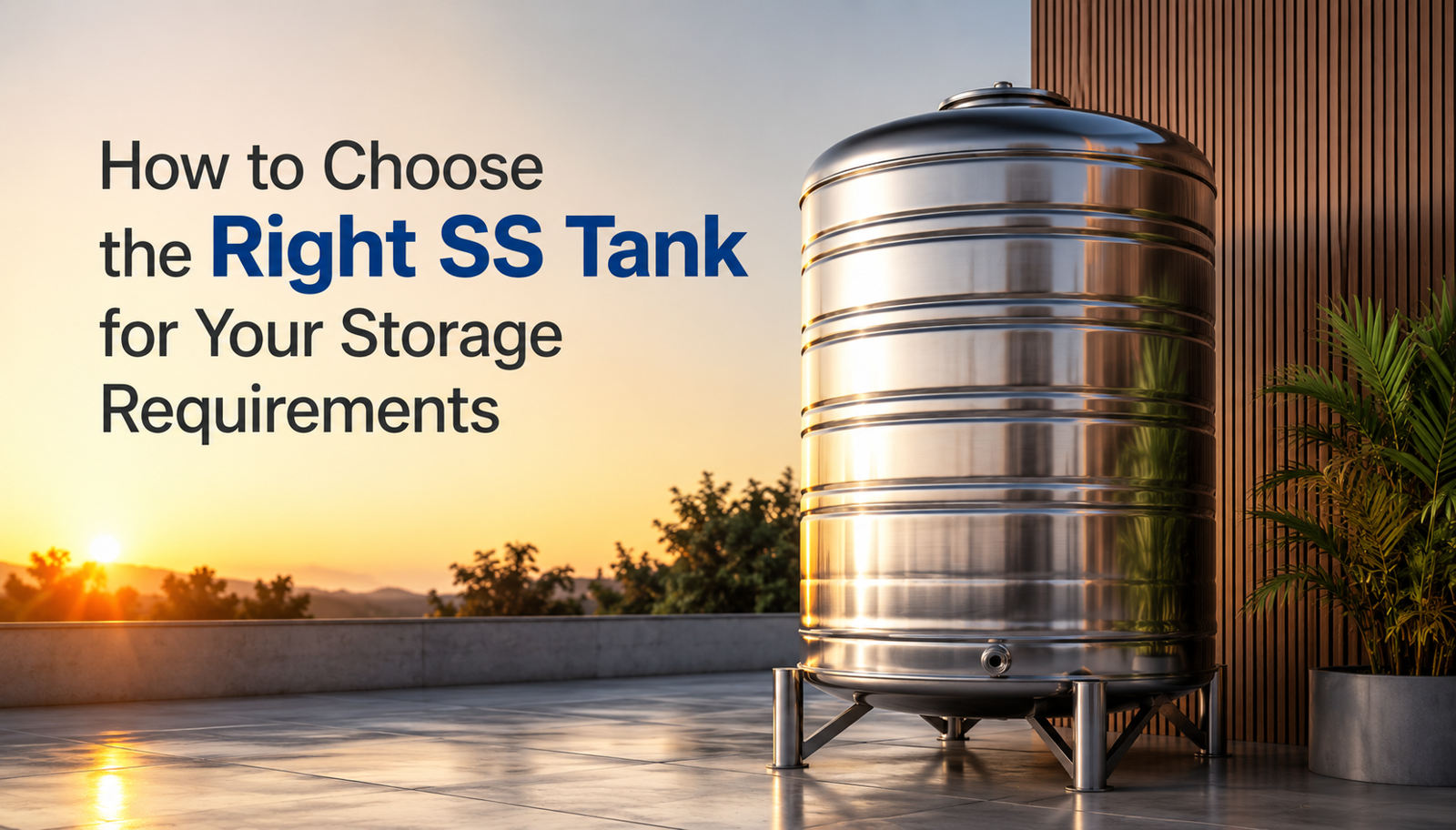
This guide explains the ten most important considerations every buyer should evaluate before purchasing a Stainless Steel Tank. Whether you're selecting a tank for a home, commercial property, institutional facility, or industrial project, these practical insights will help you make an informed decision based on engineering principles rather than assumptions.
Understanding the Intended Application
The first and most important consideration before purchasing a Stainless Steel Tank is understanding exactly how it will be used. Storage requirements vary considerably between residential, commercial, and industrial environments, and the tank should always be selected according to its intended application rather than simply its storage capacity. A potable water storage system requires different design priorities than a processing tank used in manufacturing, while a food-grade application demands different hygienic considerations than an industrial utility installation.
The stored medium largely determines the technical requirements of the tank. Potable water storage places significant importance on hygiene and material compatibility, whereas industrial applications may require additional consideration of chemical compatibility, operating temperatures, or environmental exposure. Food and beverage facilities often prioritize cleanability, smooth internal surfaces, and appropriate fabrication practices to support hygienic operation. Identifying these operational requirements before selecting a tank provides a stronger foundation for choosing the most suitable specification.
The installation environment is equally important. Tanks installed indoors generally experience different operating conditions than those exposed to direct sunlight, rainfall, humidity, or coastal environments. Evaluating these conditions early helps ensure that the selected Stainless Steel Water Tank performs reliably throughout its intended service life.
Choosing the Appropriate Stainless Steel Grade
One of the most common misconceptions among buyers is that every stainless steel storage tank offers identical performance. In reality, different stainless steel grades are designed for different service environments, and selecting the appropriate material is one of the most important decisions during the buying process.
Grade 304 stainless steel is widely used for potable water storage, food processing, and many commercial applications because it offers excellent corrosion resistance under normal operating conditions. It provides an effective balance of durability, strength, and hygienic performance for a broad range of storage requirements.
Grade 316 stainless steel contains molybdenum, an alloying element that improves resistance to chloride-induced corrosion. Because of this enhanced resistance, it is frequently selected for coastal installations or environments where exposure to chlorides is significantly higher. Engineering guidance consistently recommends selecting between these grades based on operating conditions and the stored medium rather than assuming that one material is universally superior.
Material selection also influences fabrication, maintenance, and long-term durability. Choosing the correct grade at the planning stage helps maximize the corrosion-resistant properties of stainless steel while reducing the likelihood of premature maintenance issues later in the tank's operational life.
Prioritizing Material Quality Over Initial Cost
Purchasing decisions are often influenced by initial investment, but when evaluating a Stainless Steel Tank, material quality should remain the primary consideration. Storage systems are expected to remain in operation for many years, making long-term reliability more valuable than short-term savings.
The quality of raw materials directly influences corrosion resistance, structural performance, fabrication consistency, and maintenance requirements. Stainless steel derives its protective characteristics from its chemical composition, particularly the chromium content responsible for forming the passive oxide layer that protects against corrosion. Inferior material quality or inappropriate grade selection may compromise this protective mechanism under demanding operating conditions.
A well-manufactured tank should therefore be viewed as a long-term infrastructure investment rather than simply a storage container. Selecting quality materials at the outset often contributes to dependable performance, lower maintenance requirements, and improved operational confidence throughout the service life of the tank.
Planning Storage Capacity for Present and Future Needs
Selecting the correct capacity requires more than estimating current water consumption. Storage requirements often evolve as residential occupancy increases, commercial operations expand, or industrial production grows. Choosing a capacity based solely on today's requirements may limit operational flexibility in the future.
Effective capacity planning considers daily consumption patterns, peak demand, available water supply, emergency storage requirements, maintenance schedules, and potential future expansion. Commercial buildings, hospitals, hotels, educational institutions, and manufacturing facilities frequently experience fluctuations in demand that differ substantially from average daily usage. A well-planned Stainless Steel Water Tank should therefore accommodate operational variations while providing sufficient reserve capacity for reliable performance.
Installation space also influences capacity planning. Structural loading, maintenance accessibility, transportation constraints, and available footprint all contribute to determining the most practical storage solution. Rather than selecting the largest available tank, buyers should choose a configuration that integrates efficiently into the intended installation while supporting future operational needs.
Evaluating Fabrication Standards and Build Quality
The overall performance of a Stainless Steel Tank depends as much on its manufacturing quality as on the stainless steel grade itself. Even premium stainless steel cannot deliver reliable long-term performance if the tank is poorly fabricated. Precision engineering, dimensional accuracy, welding quality, and surface finishing collectively determine how effectively the tank withstands daily operational demands while maintaining its structural integrity.
Professional fabrication involves controlled cutting, forming, welding, and finishing processes that preserve the corrosion-resistant properties of stainless steel. Industry guidance highlights that properly executed welds and carefully finished surfaces reduce the possibility of crevices where contaminants or corrosive substances may accumulate. In applications involving potable water or hygienic storage, fabrication quality becomes even more important because internal surface conditions directly influence ease of cleaning and maintenance.
When evaluating a manufacturer, buyers should look beyond external appearance. A well-engineered Stainless Steel Water Tank reflects attention to material handling, welding consistency, reinforcement design, and overall manufacturing precision. These factors contribute significantly to operational reliability and help ensure the storage system performs as intended throughout its service life.
Recognising the Importance of Corrosion Resistance
Corrosion resistance is one of the defining characteristics of stainless steel and one of the primary reasons it is widely used for water storage and industrial applications. Unlike many conventional storage materials, stainless steel protects itself through a naturally forming passive oxide layer created by chromium reacting with oxygen in the surrounding environment. This invisible protective film continuously reforms when exposed to oxygen, helping shield the underlying metal under suitable service conditions.
However, corrosion resistance should never be viewed as an automatic guarantee regardless of operating conditions. Factors such as water chemistry, chloride concentration, atmospheric exposure, operating temperature, and the nature of the stored medium all influence long-term performance. Engineering organisations consistently recommend selecting the appropriate stainless steel grade according to these service conditions rather than relying on generalized assumptions.
For buyers, this means evaluating where the tank will be installed and what it will store before making a purchasing decision. A carefully selected Stainless Steel Tank offers dependable corrosion resistance, but only when its material specification aligns with its intended application.
Maintaining Hygiene and Water Quality
For drinking water storage, hygiene is one of the most important considerations during tank selection. The material used for storing potable water should support cleanliness while remaining suitable for regular maintenance throughout its operational life. Stainless steel has long been used across food processing, beverage production, healthcare, and pharmaceutical industries because properly finished stainless steel surfaces are non-porous, durable, and comparatively easy to clean.
A smooth internal finish reduces the tendency for deposits to accumulate and supports effective cleaning procedures. Unlike porous materials that may retain residues over time, properly maintained stainless steel surfaces provide a hygienic storage environment suitable for potable water applications. These characteristics have contributed to the widespread adoption of Stainless Steel Water Tanks in residential communities, educational institutions, hospitals, hotels, and commercial buildings where maintaining water quality is an ongoing priority.
Good hygiene practices extend beyond the material itself. Periodic cleaning, inspection, and preventive maintenance remain essential for preserving water quality regardless of the storage material used. Selecting a well-designed tank that allows convenient access for inspection and cleaning makes these maintenance activities significantly easier over the long term.
Considering Installation Conditions Before Purchase
The installation environment plays an important role in determining how effectively a Stainless Steel Tank performs over time. Many buyers focus primarily on tank specifications while overlooking practical site conditions that may influence installation, maintenance, and long-term durability.
Ground-mounted installations require stable foundations capable of supporting the operational weight of a fully filled tank. Rooftop systems require additional consideration of structural loading, access routes, and available maintenance space. Outdoor installations should account for environmental exposure, including sunlight, rainfall, humidity, and, where applicable, chloride-rich coastal conditions. Industrial environments may introduce additional atmospheric contaminants that influence material selection and long-term maintenance planning.
Planning these factors before purchasing allows buyers to choose a storage solution that integrates efficiently into the available space while remaining accessible for routine servicing. A well-positioned Stainless Steel Water Tank not only simplifies installation but also supports safer maintenance and improved operational efficiency throughout its lifecycle.
Understanding Maintenance Requirements
Although stainless steel is valued for its durability and relatively low maintenance characteristics, no storage system should be considered completely maintenance-free. Routine inspection and preventive maintenance play an important role in preserving corrosion resistance, structural integrity, and operational reliability.
Regular cleaning helps remove sediments or deposits that may accumulate during normal operation. Periodic inspection of welded joints, fittings, access covers, and drainage components allows potential issues to be identified before they affect system performance. Using cleaning methods that are appropriate for stainless steel surfaces also helps preserve the passive protective layer responsible for the material's corrosion resistance.
One of the practical advantages of a high-quality Stainless Steel Tank is that its maintenance requirements are generally straightforward when the system is correctly designed and installed. Tanks that provide easy access for inspection and cleaning enable maintenance personnel to perform routine servicing more efficiently, reducing operational interruptions while supporting long-term performance.
Evaluating Customization and Future Scalability
Storage requirements rarely remain unchanged throughout the life of a building or industrial facility. Residential developments expand, commercial occupancy increases, and production facilities often experience growing operational demands. Selecting a Stainless Steel Tank with future scalability in mind can therefore provide greater flexibility while reducing the need for costly system modifications later.
Customization enables a storage solution to be adapted to available installation space, operational requirements, and infrastructure constraints. Depending on the application, this may involve modifications to dimensions, orientation, inlet and outlet locations, access openings, support structures, or instrumentation provisions. Industrial applications may also require insulation, process connections, or additional engineering features that support specialized operating conditions.
Working with a manufacturer capable of understanding these project-specific requirements helps ensure the storage system complements the facility rather than requiring the facility to adapt to a standard design. A thoughtfully engineered Stainless Steel Water Tank can continue meeting operational requirements even as those requirements evolve over time.
Selecting a Manufacturer That Understands Your Requirements
After evaluating the technical specifications of a Stainless Steel Tank, the next step is selecting a manufacturer capable of delivering a solution that matches your operational requirements. The quality of a storage tank depends not only on the material used but also on the manufacturer's understanding of engineering principles, fabrication standards, application-specific design, and quality assurance practices. A reliable manufacturer takes the time to understand the intended application before recommending a storage solution rather than offering a standard product for every requirement.
Technical consultation plays an important role in this process. Factors such as the stored medium, installation environment, available space, future expansion plans, and maintenance accessibility should all be considered before finalizing the tank design. Manufacturers with experience in residential, commercial, and industrial applications are generally better equipped to recommend solutions that deliver dependable performance over the long term. At Neropure, the focus is on understanding each customer's storage requirements before suggesting a suitable Stainless Steel Water Tank, helping buyers choose a solution that aligns with their operational objectives rather than relying on assumptions.
Avoiding Common Mistakes Before Buying
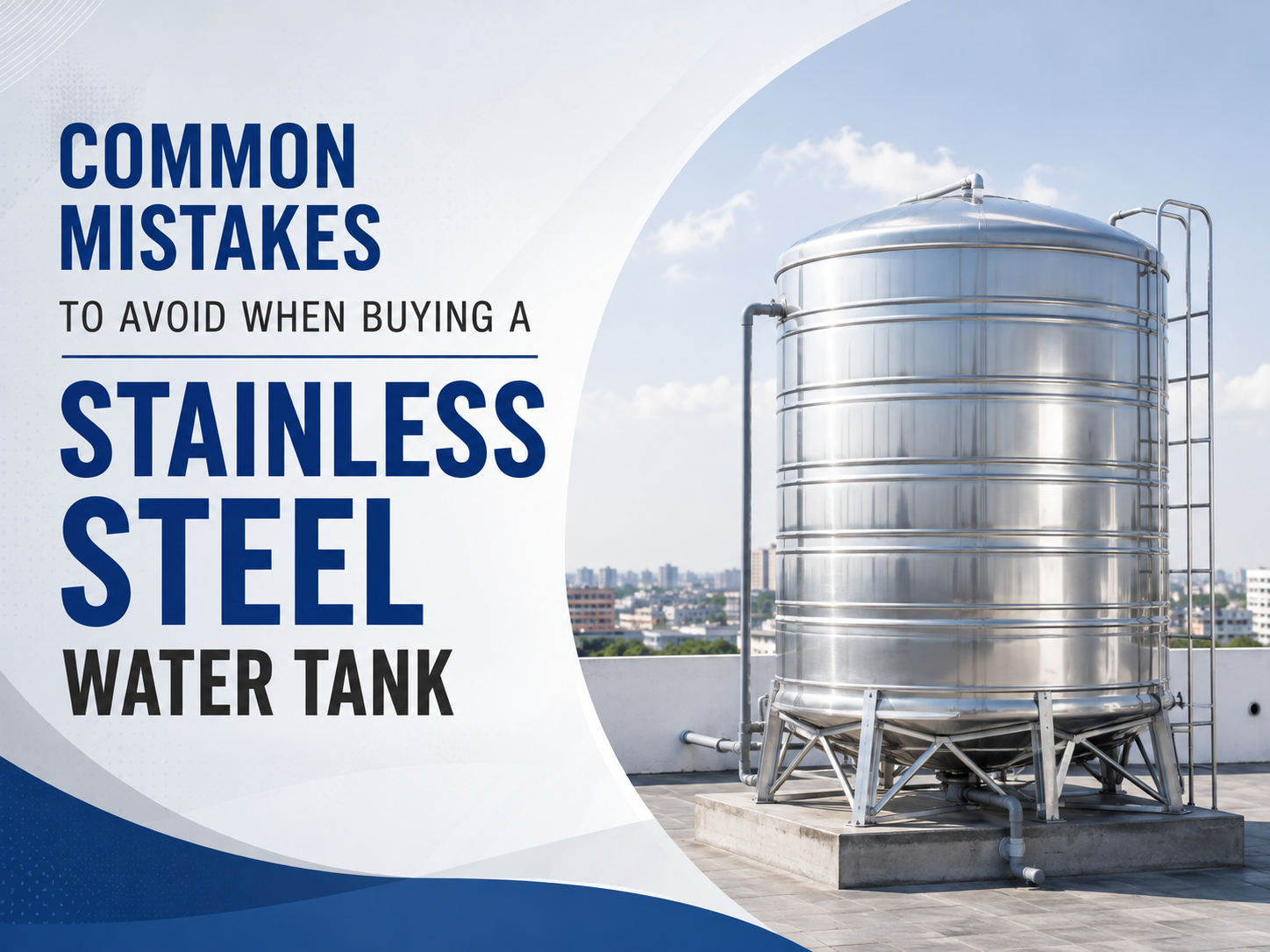
Many buyers concentrate on visible specifications such as capacity or dimensions while overlooking several technical aspects that significantly influence long-term performance. One of the most common mistakes is selecting a Stainless Steel Tank without first understanding the characteristics of the stored medium. Material compatibility should always be evaluated before making a purchase because different operating environments require different stainless steel grades.
Another common oversight is assuming that every stainless steel tank offers the same level of durability. Material quality, fabrication standards, weld integrity, reinforcement design, and surface finishing all contribute to the overall performance of the storage system. Ignoring these factors may lead to unnecessary maintenance or operational limitations in the future.
Planning only for current storage requirements can also become costly as facilities expand. Residential occupancy may increase, commercial operations may grow, and industrial production often evolves over time. Considering future storage needs during the planning stage allows buyers to invest in a solution that remains suitable as operational requirements change.
Installation planning is another area that deserves attention. Adequate structural support, sufficient maintenance access, and appropriate environmental considerations should be addressed before installation begins. Evaluating these practical factors early helps ensure that the selected Stainless Steel Water Tank integrates efficiently into the available infrastructure while remaining easy to inspect and maintain.
Making an Informed Investment for Long-Term Performance
Purchasing a Stainless Steel Tank should be viewed as a long-term investment in reliability rather than simply acquiring a storage container. A carefully selected storage system contributes to operational continuity, water quality, maintenance efficiency, and infrastructure resilience for many years. Achieving these outcomes requires balancing technical specifications with practical considerations such as installation conditions, maintenance accessibility, future scalability, and application-specific requirements.
Understanding the intended use of the tank, selecting the appropriate stainless steel grade, evaluating fabrication quality, considering environmental exposure, and planning for future operational needs all contribute to a more informed purchasing decision. Buyers who invest time in evaluating these factors are generally better positioned to choose a storage solution that continues delivering dependable performance throughout its operational life.
Whether the requirement is for a residential property, commercial establishment, institutional facility, or industrial project, choosing the right Stainless Steel Water Tank begins with technical understanding rather than marketing claims. A thoughtful selection process helps ensure the storage system not only meets today's requirements but also continues supporting future operational needs with confidence.
Conclusion
Choosing the right Stainless Steel Tank involves much more than comparing capacities or selecting the lowest initial cost. Material grade, corrosion resistance, fabrication quality, hygienic performance, installation conditions, maintenance accessibility, and future scalability all influence the long-term success of a storage system. Evaluating these factors before making a purchase allows buyers to select a tank that delivers dependable performance while supporting operational efficiency for years to come.
A high-quality Stainless Steel Water Tank is designed to provide safe, durable, and reliable storage across residential, commercial, and industrial applications when the correct material and design are chosen for the intended environment. Investing in a solution based on technical suitability rather than assumptions reduces the likelihood of future operational challenges and helps maximize long-term value.
Frequently Asked Questions
What should I check before buying a stainless steel tank?
Before purchasing a Stainless Steel Tank, evaluate its intended application, storage capacity, stainless steel grade, fabrication quality, installation environment, maintenance accessibility, and future scalability. Choosing a tank based on these technical factors helps ensure reliable long-term performance.
Which stainless steel grade is best for a stainless steel water tank?
Grade 304 stainless steel is commonly used for potable water storage and many commercial applications because of its corrosion resistance under normal service conditions. Grade 316 is often preferred in coastal or chloride-rich environments where greater corrosion resistance is required. The most suitable grade depends on the application and operating environment.
Why is corrosion resistance important in a stainless steel tank?
Corrosion resistance helps maintain the structural integrity and service life of the tank. Stainless steel forms a naturally occurring passive oxide layer that protects the material from corrosion under appropriate operating conditions. Selecting the correct material grade is essential for maintaining this performance over time.
How does fabrication quality affect tank performance?
Fabrication quality influences structural strength, weld integrity, hygienic performance, and durability. Precision manufacturing and proper finishing help preserve the corrosion-resistant properties of stainless steel while supporting reliable operation and easier maintenance.
Is a stainless steel water tank suitable for drinking water storage?
Yes. Properly selected and maintained Stainless Steel Water Tanks are widely used for potable water storage because stainless steel offers excellent corrosion resistance and hygienic properties, making it suitable for drinking water applications.
Can stainless steel tanks be customized?
Yes. Stainless steel tanks can be customized to meet specific residential, commercial, and industrial requirements. Depending on the application, customization may include different capacities, orientations, inlet and outlet configurations, access openings, support structures, insulation, or process-specific features.
How often should a stainless steel tank be maintained?
Maintenance frequency depends on the application and operating conditions. Periodic inspection, cleaning, and checking fittings and welded joints help maintain hygiene, corrosion resistance, and overall operational reliability. Following the manufacturer's maintenance recommendations is always advisable.
Why choose Neropure for stainless steel tank solutions?
Neropure specializes in stainless steel storage solutions designed for residential, commercial, and industrial applications. By understanding each customer's storage requirements and application needs, the company helps recommend suitable Stainless Steel Tank solutions that prioritize durability, hygiene, and long-term performance.

Write a comment ...