
Every storage system eventually comes down to one question: how reliably can it protect what is stored inside?
Whether the requirement involves drinking water, food ingredients, pharmaceuticals, process liquids, or industrial chemicals, storage infrastructure plays a direct role in safety, quality, and operational efficiency. This is precisely why steel tanks continue to remain a preferred solution across industries despite the emergence of numerous alternative materials.
From residential water storage systems to large-scale industrial operations, a well-designed Steel Tank offers the combination of strength, durability, and adaptability that modern facilities demand. However, understanding the different types of steel tanks, their applications, and their advantages is essential before making an investment.
This guide explores everything you need to know about steel tanks and why stainless steel continues to be one of the most trusted materials for long-term storage solutions.
What Is a Steel Tank?
A steel tank is a storage vessel manufactured from steel-based materials and designed to safely contain liquids, gases, or process materials. Depending on the intended application, these tanks can vary significantly in size, configuration, material composition, and operating features.
While steel tanks are often associated with water storage, their applications extend far beyond that. Industries ranging from food processing and pharmaceuticals to manufacturing and chemical processing rely on steel tanks because of their structural integrity and long service life.
What makes steel particularly valuable is its ability to withstand demanding operating conditions while maintaining reliability over extended periods.
Understanding the Main Types of Steel Tanks
Not every steel tank is built for the same purpose. The material selected often depends on what will be stored, the surrounding environment, and the operational requirements of the facility.
Stainless Steel Tanks
A Stainless Steel Tank is manufactured using stainless steel alloys that contain chromium. This chromium reacts with oxygen present in the atmosphere to form a thin passive oxide layer on the metal surface. The layer acts as a protective barrier and significantly improves corrosion resistance.
This characteristic is one of the primary reasons stainless steel is widely used for water storage, food production, dairy processing, pharmaceutical manufacturing, and hygienic industrial applications.
Facilities that prioritize cleanliness and product purity often prefer stainless steel because the material supports sanitation and maintenance requirements more effectively than many conventional alternatives.
Carbon Steel Tanks
Carbon steel tanks are commonly used in industrial operations where high structural strength is required. They are often selected for storing fuels, industrial liquids, and process materials.
In many applications, protective coatings or corrosion-control measures are implemented to improve performance in challenging environments.
Vertical Steel Tanks
Vertical tanks are designed to maximize storage capacity while minimizing ground-level space requirements.
This configuration is frequently used in water storage projects, industrial facilities, and commercial developments where available installation space is limited.
Horizontal Steel Tanks
Horizontal tanks are typically installed where height restrictions exist or where transportation and installation considerations favor a horizontal design.
Their versatility makes them suitable for numerous industrial and commercial storage applications.
Why Stainless Steel Has Become the Preferred Choice
Although several steel tank options exist, stainless steel continues to gain preference across industries that prioritize reliability and hygiene.
The reason becomes clear when examining how these tanks perform over years of continuous service.
Exceptional Resistance to Corrosion
Corrosion remains one of the most common causes of storage tank deterioration.
When ordinary metals are exposed to moisture and oxygen, deterioration gradually occurs, affecting both structural integrity and long-term reliability. Stainless steel addresses this challenge through its chromium-rich composition and passive protective layer.
This built-in protection helps the material maintain its condition even when exposed to demanding operating environments.
For facilities that depend on uninterrupted storage performance, corrosion resistance is not merely a technical feature. It is a critical operational advantage.
Hygienic Storage Conditions
Water quality and contamination control have become increasingly important considerations across residential, commercial, and industrial sectors.
Unlike porous surfaces that can become difficult to maintain over time, stainless steel provides a smooth and non-porous surface that supports effective cleaning procedures.
This is one of the reasons stainless steel tanks are widely used in industries where hygiene standards are closely monitored.
For potable water storage, maintaining a clean storage environment directly contributes to overall water quality management.
Long Operational Life
Infrastructure investments are expected to perform for years, often decades.
Property owners and facility managers increasingly evaluate storage systems based on lifecycle value rather than initial purchase considerations alone. Stainless steel's durability allows it to withstand demanding operating conditions while maintaining structural reliability.
This long service life often translates into reduced replacement requirements and greater confidence in the storage system over time.
Adaptability Across Industries
One of the strongest characteristics of a Steel Tank is its ability to support a broad range of applications.
Modern tanks can be designed with monitoring ports, process connections, access openings, mixing systems, insulation arrangements, and specialized fittings based on operational requirements.
This adaptability allows engineers and project consultants to create solutions tailored to specific industries and facility needs.
Common Applications of Steel Tanks
Steel tanks have become indispensable across modern infrastructure because of their versatility.
Two sectors where they are especially valuable include:
Potable water storage and water management systems
Industrial processing, food production, pharmaceutical, and chemical facilities
Beyond these applications, steel tanks are frequently used in hospitality projects, healthcare facilities, educational institutions, manufacturing operations, and municipal infrastructure.
Their ability to support diverse operating conditions makes them one of the most flexible storage solutions available today.
Why Water Storage Requires Special Consideration
Among all steel tank applications, water storage presents unique challenges.
The storage environment directly influences water quality, maintenance requirements, and long-term performance. Factors such as contamination control, accessibility for cleaning, corrosion resistance, and operational reliability become increasingly important as storage capacity grows.
In high-usage buildings, these considerations become even more critical. Hotels, hospitals, commercial complexes, and residential communities depend on continuous access to clean water. Any weakness in the storage system can quickly become an operational concern.
This is one reason why stainless steel water storage solutions continue to gain popularity among property developers, facility managers, and infrastructure planners.
How to Select the Right Steel Tank
Selecting a tank should never be based solely on capacity.
The intended application, stored material, environmental conditions, maintenance requirements, and future expansion plans all influence the most appropriate solution.
A tank that performs exceptionally well in a pharmaceutical facility may not be configured the same way as a tank intended for residential water storage. Similarly, industrial process requirements often demand additional features such as instrumentation ports, mixing systems, insulation, or specialized fittings.
Understanding these requirements before installation helps ensure long-term operational success.
The Growing Preference for Stainless Steel Water Storage
As awareness surrounding water quality continues to increase, more property owners are prioritizing storage systems that support hygiene and durability simultaneously.
A Stainless Steel Tank offers both advantages without requiring compromises in structural performance. Its ability to resist corrosion, support maintenance efficiency, and maintain a hygienic storage environment has made it one of the most trusted choices for modern water storage applications.
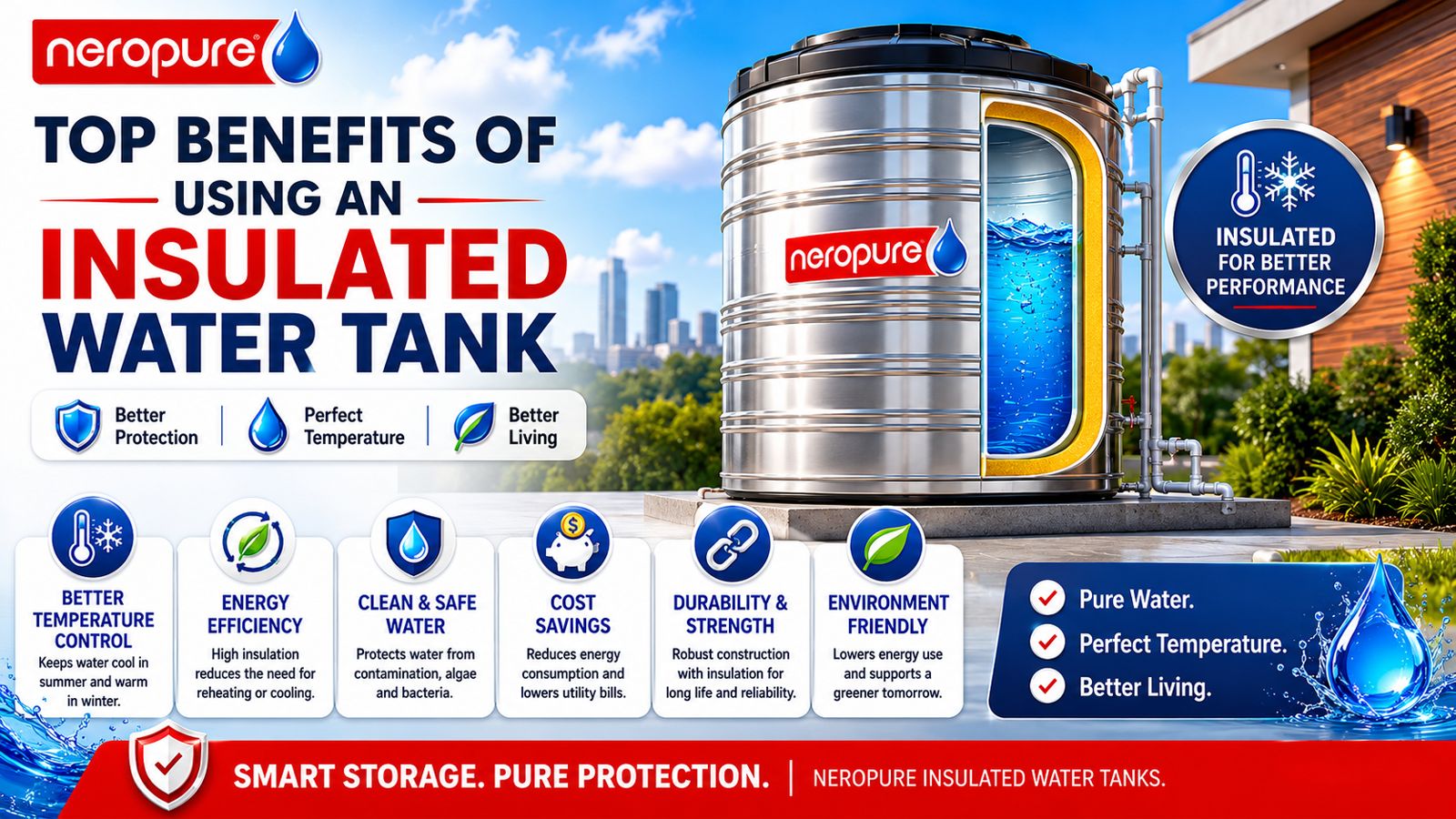
At Neropure, this approach reflects a broader philosophy toward water storage. The objective is not simply to store water. The objective is to help preserve water quality while delivering dependable long-term performance.
Conclusion
Steel tanks remain a foundational component of modern infrastructure because they provide the reliability, adaptability, and durability required across a wide range of industries.
Whether the application involves potable water, food production, pharmaceuticals, industrial processing, or commercial operations, selecting the right Steel Tank can significantly influence long-term efficiency and performance.
Among the available options, the Stainless Steel Tank continues to stand out for its corrosion resistance, hygienic properties, structural strength, and operational longevity.
For organizations and property owners seeking dependable storage solutions, understanding the various tank types, benefits, and applications is the first step toward making a well-informed investment.
Frequently Asked Questions
What is a steel tank?
A steel tank is a storage vessel used for containing liquids, gases, or process materials across residential, commercial, industrial, and municipal applications.
What is the difference between a steel tank and a stainless steel tank?
A stainless steel tank contains chromium, which forms a passive protective oxide layer that improves corrosion resistance and supports hygienic storage conditions.
Why are stainless steel tanks widely used for water storage?
Stainless steel tanks are valued for their durability, corrosion resistance, ease of cleaning, and suitability for maintaining water quality in storage systems.
Can stainless steel tanks be used in industrial applications?
Yes. Stainless steel tanks are extensively used in food processing, pharmaceuticals, dairy operations, chemical processing, manufacturing facilities, and water treatment systems.
How long does a stainless steel tank last?
Service life depends on material grade, operating environment, maintenance practices, and application requirements. Stainless steel tanks are generally recognized for their long-term durability.
Are stainless steel tanks suitable for commercial buildings?
Yes. Stainless steel tanks are commonly used in hotels, hospitals, educational institutions, commercial complexes, and residential developments where reliable water storage is essential.



Write a comment ...